The Broken Spell
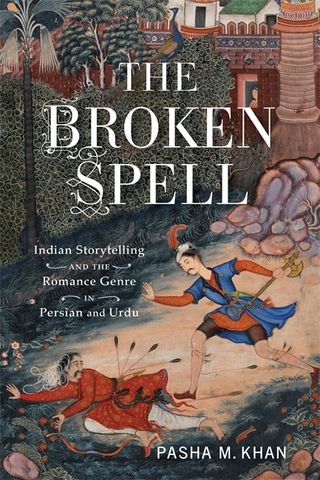
The Broken Spell: Indian Storytelling and the Romance Genre in Persian and Urdu was my first book. Taking its cue from Shamsur Rahman Faruqi's lament regarding the darkness cast over the history of South Asian storytellers (qissah-khwans or dastan-gos), the book chronicles their careers and the techniques of storytelling. In this, it was partly anticipated by Frances Pritchett's The Romance Tradition in Urdu: Adventures from the Dastan of Amir Hamzah, and Faruqi's own multivolume study Sahiri, Shahi, Sahib-qirani.
The Broken Spell is primarily a theoretical framing of the qissah genre in terms of a theory of genre. This theoretical orientation reflects the starting point of the questioning that led to my 2012 dissertation: "What is a qissah?" The book looks especially at the practice of the 17th-century storyteller Fakhr uz-Zamani Qazwini in order to cinch its claim of the multigenre status of qissahs (and, indeed, any text). The importance of genre in encoding epistemologically-imbued worldviews comes out especially in the book's analysis of the late nineteenth-century decline of the qissah in the genre system or hierarchy of genres in South Asia.
This book was published in 2019 in Wayne State University Press' Fairy Tale Studies series, which boasts such profound delights as the edited volume Transgressive Tales: Queering the Grimms.